
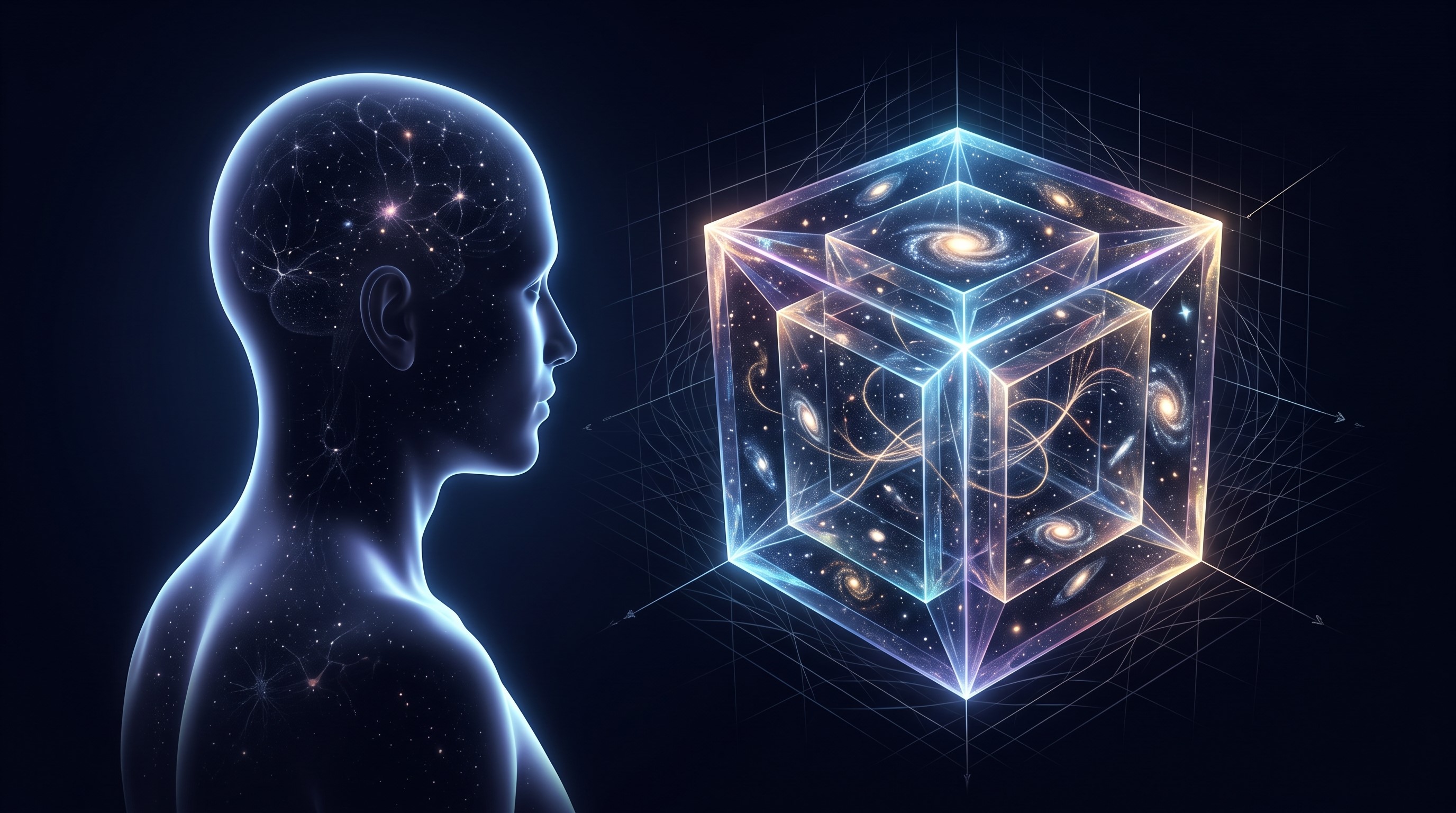
1. Why Is Scientific Knowledge Reliable?

The belief that scientific knowledge consists solely of tangible, directly observed laboratory data is a superficial assumption. In reality, humanity rarely experiences scientific phenomena in their raw, unmediated form.
No human being has ever directly watched the path of an electron, witnessed the warping of spacetime by gravity with the naked eye, or observed a multi-million-year evolutionary transition from start to finish.
More importantly, raw data speaks for nothing on its own. A fossil fragment, a single pixel from a telescope, or the needle movement on a gauge is not knowledge by itself. Knowledge is not merely the external world pouring unshaped into consciousness; humans can only receive and comprehend it through their own cognitive faculties, logical frameworks, and understanding.
This process rests on two foundational pillars:
- Indirect Testimony (Consensus-Based Grounding): It does not rely on the subjective claim of an individual, but on a vast, interconnected network of collective testimony formed by thousands of independent researchers, measurements, and cross-verified experiments across the globe.
- Reason's Construction and Comprehension: It is reason itself that processes these dispersed data points through causality, non-contradiction, and mathematical consistency, synthesizing them into a coherent model. Data is the raw material; knowledge is what reason constructs from it.
The clearest example of this is the Theory of Evolution. When a naturalist or materialist philosopher defends evolution today, they do not do so because they directly observed the entire historical process. They defend it because their reason synthesizes indirect lines of evidence—fossil records, genetic sequences, and morphological patterns—into an undeniably consistent model. The theory attains rational certainty through the coherence of this model constructed by reason.
If this is indeed the path to scientific knowledge—namely, that indirect data, once verified through the filter of reason, produces reliable conclusions—then intellectual consistency requires applying this very standard to modern physics.
The very same reason that accepts evolutionary biology through indirect data and rational synthesis is led inevitably to another profound reality when applying that identical methodology to theoretical physics: the Block Universe.
2. Which Is the Most Widely Accepted Universe Model?
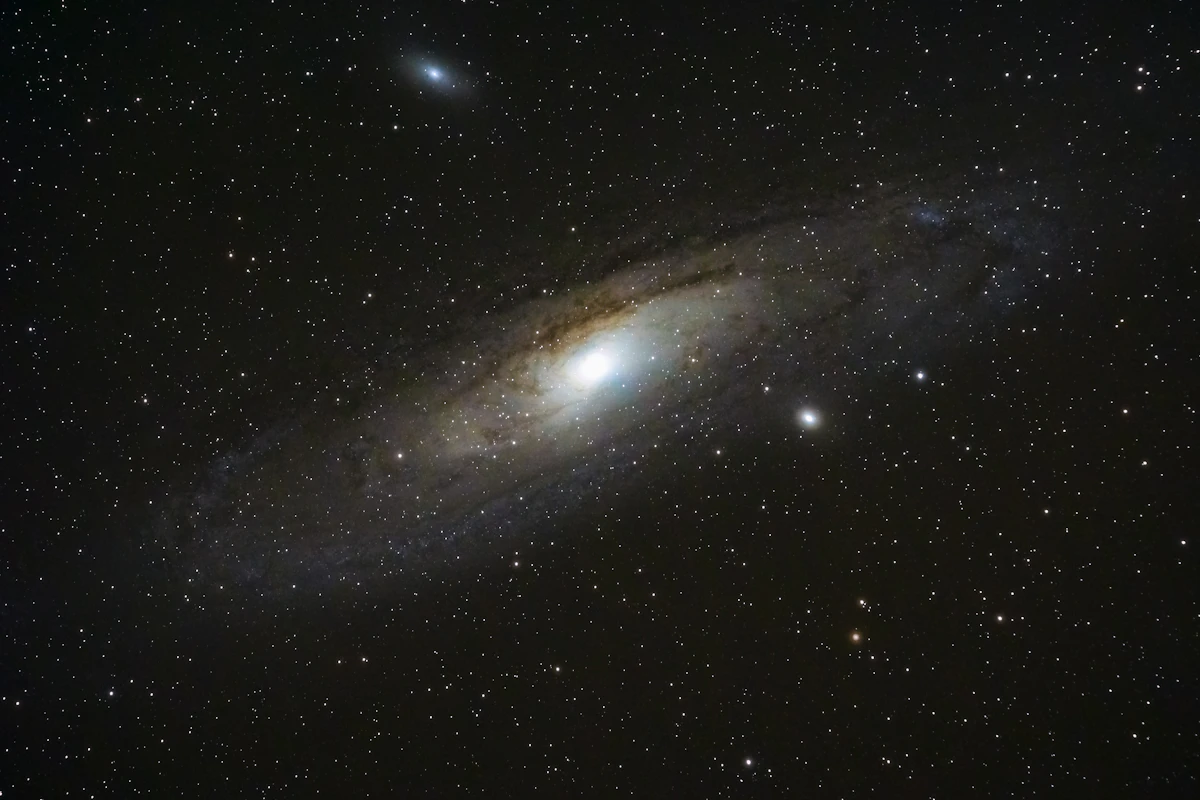
Most people intuitively view time as a river flowing continuously from past to future. Yesterday is
Comments (0)